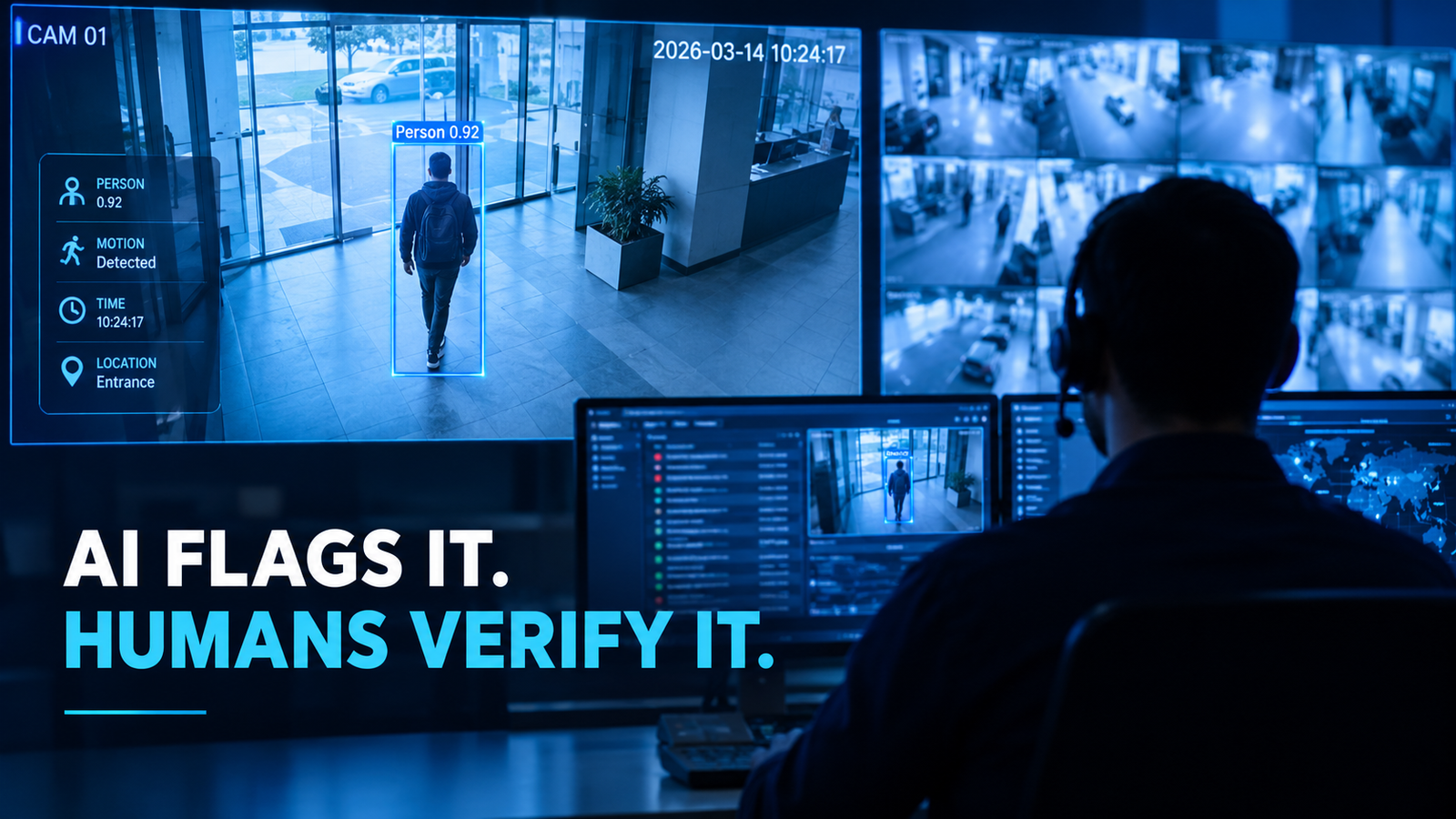
A virtual assistant used to mean one freelancer working through a to-do list from a home office. Today, the best business VA support looks a lot more like adding a trained, supervised member to your team, one who answers your calls, keeps your CRM current, follows up with customers, and works with AI tools instead of against them. Here is what changed and how we run it.
Published by Synthesis BPO · Reviewed by Sumeet W, Co-Founder, VisionSync Solutions · October 24, 2026 · 9-minute read
Key facts
- What a business VA is now: a dedicated, trained, supervised team member handling reception, follow-up, CRM upkeep, research, and scheduling, not a freelancer clearing a task list.
- Remote is mainstream. Gallup’s 2025 tracking of U.S. employees in remote-capable jobs found just over half working hybrid, about a quarter fully remote, and only 21% fully on-site. The question is no longer whether remote support is acceptable. It is whether it is managed.
- AI use is widespread but shallow. In Gallup’s Q3 2025 survey, 45% of U.S. employees used AI at work at least a few times a year, but only about 10% used it daily.
- Our model: all of our staff work from our own offices in India and the Philippines. Nobody works from home.
- If it isn’t working: a replacement typically takes one to two weeks, and sometimes only a couple of days.
- Coverage math: one VA covers roughly a nine-hour shift, five or six days a week. A 24/7 desk needs a roster of three to four people. For example, one dental front desk that runs 7 a.m. to 8 p.m. Central Time is covered by two virtual receptionists.
- Call coverage: on our dental clinic answering-support programs, the standard is 100% coverage of calls received. Each call is either answered within the agreed number of rings or returned with a callback, so no caller is left without a response.
- Typical rate: $8 to $11 per person per hour, often around $10 to $11. Senior business-development or executive-level profiles can run $14 to $15 or more.
What is a business virtual assistant in 2026?
A business virtual assistant is a dedicated remote team member who handles ongoing business tasks on your behalf: answering calls and emails, keeping CRM records current, scheduling, following up with prospects or patients, and researching. The role sits closer to your front office than to a one-off task list.
It overlaps with a personal VA. The difference is mostly context: a business VA typically supports a company, department, or senior leader, with more seniority, scope, and process around the work.
How has virtual assistant support changed?
It has moved from task-by-task help to accountable, supervised team membership. Here is the difference between the typical freelance or marketplace model and the dedicated model we run:
| Typical freelance or marketplace VA | Dedicated, supervised VA | |
| Where they work | Usually from home, often alone | A company office, with a team around them |
| Training | Mostly self-directed | You train the first batch; our trainers sit in and document the process |
| Supervision | The client manages every detail | A supervisor, team leaders, and managers oversee the work |
| If it isn’t working | Start the search over | We replace the person, typically within one to two weeks |
| Records | Depends on the individual | Calls, notes, and follow-ups are logged in your CRM |
| AI | Individual choice, often undisclosed | Used where it helps, and with your approval |
| Coverage | One person, whenever available | Planned shifts, with a roster for extended hours |
This describes common patterns, not every freelancer. Many are excellent. The point is what changes when a VA is part of a managed operation.
Shift 1: From freelancer to team member
A VA who only receives tasks has to be told everything. A VA who is trained on your business can run a function.
That is why we ask clients to train the first batch themselves, usually a day or two, and to stay available for questions during the first week or two. Our trainers sit in, document your process, and build it into the account, so that retraining a replacement, or adding a second VA, does not mean reteaching everything. A supervisor oversees the work, reports on it, and calibrates with you regularly: typically weekly at the start, then once or twice a month. We think of the supervisor as the captain of the ship.
Shift 2: From inbox helper to the front line of your business
Business VAs increasingly do the work customers actually see. They answer the phone, record who called and why, send confirmations, and follow up.
Two examples, both anonymized because neither client has given us written permission to share its name:
- A dental clinic front desk. When the clinic came to us, it was struggling to keep proper records. While one person was on a call, others waited and some dropped. Phone numbers were not tracked, callbacks were not made, and patient appointments drifted out of sync with the doctors’ and dentists’ schedules. Everything was handled by phone, with records kept in Excel sheets. Today, two virtual receptionists cover 7 a.m. to 8 p.m. Central Time. They answer incoming calls, register each contact in the CRM, send appointment emails to patients, and handle follow-ups and the coordination between each patient and their booking. The records that lived in Excel sheets moved into an automated workflow, and reporting and attendance tracking are in place. Coverage of calls received is now 100%: every call is either answered within the agreed number of rings or returned with a callback. Only one receptionist is on duty at a time on this account, so when they are on another call, the next caller is flagged as waiting. As soon as the current call ends, the receptionist calls that person back, answers their questions, and enrolls the booking if that is what the call was for. Patients are also followed up on their appointments. Call volume is steady, and the window is thirteen hours long, which is more than one person on one shift can cover.
- An Illinois real estate broker. One dedicated VA, in place for more than seven months, makes outbound calls to prospects the broker supplies, books appointments for people looking to buy or sell, answers the broker’s office calls during business hours, and records notes and updates for the broker.
We are not claiming measured business outcomes, such as revenue or booking rates, for either example. What both show is the shape of the role: the VA owns a recurring function, inside your systems, with a clear boundary around what they can decide. You define that boundary. When something needs your approval, the VA tells the caller that a response will follow and comes back within the time you set.
A VA also does not give medical advice or make decisions that belong to your clinicians or your team.
How does 100% call coverage work?
Our standard on answering-support programs for dental clinics is 100% coverage of the calls received: each call is either answered within the agreed number of rings or returned with a callback. How we hold it depends on the size of the team on shift:
- When the VA is on another call. The system shows the incoming call as waiting. When the current call ends, the VA calls the person back, answers their questions, and enrolls the booking if that is what the call was for. This is how the dental clinic above runs, because only one receptionist is on duty at a time.
- When several agents are on shift. We manage average handling time (AHT), the time we allow each call, so calls are completed within the stipulated time and fewer are left waiting.
- When a call is still missed. Our dialing system and CRM capture the number of any unanswered call, and the team calls it back. The same dialing setup lets a VA take incoming calls and place outbound callbacks from one workflow.
The commitment is that no caller is left without a response. It is a coverage standard, not a promise that no caller ever waits a few minutes for a callback.
Shift 3: AI-assisted, human-accountable
AI has changed what a VA does all day, mostly by taking over the record-keeping. Many of the CRMs our clients use now have AI built in, so much of the information from calls and messages is captured automatically. The VA still takes notes and sends emails, and email drafts come from our in-house trained AI model, or from a third-party or open-source AI platform when the client approves it. The tools differ by account, and the choice is yours.
Why this matters: Gallup found that 45% of U.S. employees used AI at work at least a few times a year in Q3 2025, but only about 10% used it daily, and just 37% said their employer had implemented AI to improve productivity or quality. In other words, AI is present in most workplaces but built into very few jobs. A VA whose daily workflow already includes AI-assisted record-keeping and drafting is one way to close that gap without your team having to learn new tools.
The rule we hold to is that AI does the heavy lifting on records and drafts, and the VA stays accountable for what goes out. Our VAs are trained thoroughly on the AI tools used on each project, so they can use them to support your prospects and clients the right way. Nothing runs on autopilot: the AI is managed and moderated by the VA according to what each request needs. AI does not know your clinic’s practices or your sales process. Training does. We also never add AI to an engagement you have not approved.
Why where the VA sits matters: remote does not have to mean unsupervised
Remote work is now normal. Gallup’s 2025 data shows that only about one in five remote-capable U.S. employees is fully on-site. Your VA working somewhere else is unremarkable. What matters is whether that remote work is managed.
Our answer is a policy, not a preference: 100% of our workforce works from our own dedicated offices in India and the Philippines. No VA works from home. They are reviewed, monitored, and trained by their team leaders, managers, and trainers, and they work set eight- or nine-hour shifts under supervision.
Work from home can suit some roles and some people. For a client-facing role where reliability matters, we decided we cannot guarantee a home internet connection, a power backup, or a quiet, focused environment, so we do not offer it. That is non-negotiable for us, and it is a large part of why the quality we commit to holds up day after day.
What if a VA isn’t working out?
Tell us, and we will not argue. If, after selection, training, and a few weeks or even a couple of months, you decide a VA is not the right fit, we first look at whether there is room to improve. If we agree the person is not going to get there, we replace them.
The commitment is one to two weeks. Two weeks can sound long, and that is the honest timeline, but we have made replacements in a couple of days. What stays constant is that underperformers are removed and replaced with better candidates.
How to evaluate any virtual assistant provider
Ask every provider these questions, including us:
- Where will my VA work? In an office, or from home? Which country and time zone?
- Who supervises them? Is there a named supervisor, team leader, or manager, and how often do they report to you?
- What happens if it doesn’t work out? How fast is a replacement, and who decides?
- How will they be trained? What do you provide, what do they provide, and who documents the process?
- What can the VA decide, and what needs my approval? Is that written down?
- How is coverage planned? One person covers roughly nine hours. What is the plan for longer windows or absences?
- How is AI used? Which tools, with which data, and only with your approval?
- How is pricing structured? Is it per person per hour, and what is included?
- How is my data protected? Ask what practices the provider follows and what it can and cannot promise.
What does a business VA cost?
Business and personal VAs typically run $8 to $11 per person per hour, often around $10 to $11. More specialized business-development or executive-level profiles can run $14 to $15 or more. Final pricing depends on experience, language, task complexity, and the schedule you need, so we quote after understanding your requirement. See our Business Virtual Assistant Services page for details.
Why Synthesis BPO and VisionSync Solutions
Synthesis BPO is a sister concern of U.S.-registered VisionSync Solutions LLC, our parent company. We have deployed more than 25 virtual assistants for more than 20 clients across personal and business roles, and we run every engagement on the same principles:
- An extended team, not a vendor that takes a task and disappears. We learn why you are outsourcing, how you want the work done, and what your boundaries are.
- Experienced people matched to the role. We generally look for at least one to two years of relevant experience, and you can interview candidates before they start.
- Supervision you can see. Regular reporting and calibration, with a supervisor responsible for the account.
- Clear, per-person pricing. No surprise line items added later.
- Practices, not badges. We follow the practices associated with recognized privacy and security frameworks, and we do not claim certifications we do not hold. Client information is not shared with unrelated third parties.
To talk through your requirement, call +1 (800) 427-4470 or email info@synthesisbpo.com.
Frequently asked questions
What is a business virtual assistant? A dedicated remote team member who handles ongoing business tasks such as answering calls and emails, keeping CRM records current, scheduling, follow-ups, and research, typically supporting a company, department, or senior leader.
How is a business VA different from a freelancer? A freelancer is usually one person working alone, often from home, with the client managing the details. A dedicated VA works inside a supervised team, is trained on your process, is documented and calibrated regularly, and can be replaced by the provider if the fit is wrong.
Do your virtual assistants work from home? No. All of our staff work from our own offices in India and the Philippines, under the supervision of team leaders, managers, and trainers.
Do your virtual assistants use AI? Yes, where it helps. Many CRMs now capture information with built-in AI, and email drafts come from our in-house trained AI model or from a third-party or open-source platform the client has approved. Our VAs are trained on the tools used on each project and moderate them, so nothing runs on its own. The VA stays accountable for what is sent, and we do not add AI to an engagement the client has not approved.
Can a VA cover my business 24/7? Not one person. A single VA covers roughly a nine-hour shift, five or six days a week. Round-the-clock coverage is staffed with a roster, typically three to four people across shifts.
What happens if I’m not happy with my VA? We will look at whether there is room to improve. If we agree the person is not the right fit, we replace them, typically within one to two weeks and sometimes within days.
How long does it take to get a VA up to speed? You provide initial training, often a day or two, and stay available for questions during the first week or two. Our trainers document the process, which makes later changes or additions faster.
Can a VA work as a front desk or receptionist? Yes. For example, two virtual receptionists cover a dental clinic’s front desk from 7 a.m. to 8 p.m. Central Time, handling calls, CRM entries, appointment emails, and follow-ups. A VA does not give medical advice, and clinical questions go to qualified clinic staff.
Will every call to my business be answered? On our dental clinic answering programs, the standard is 100% coverage of calls received: each call is either answered within the agreed number of rings or returned with a callback. If the VA is on another call, the caller is flagged as waiting, and the VA calls them back as soon as the current call ends, answers their questions, and enrolls the booking if that is what the call was for. It is a coverage standard, not a promise that no caller ever waits, and results depend on call volume and how well the process is defined.
What happens if my VA is busy when another call comes in? The waiting call is flagged, and the VA calls the person back after the current call. On programs with several agents, we manage average handling time so calls are completed within a set time, and our dialing system and CRM capture the number of any unanswered call so the team can call it back.
How much does a business virtual assistant cost? Typically $8 to $11 per person per hour, with senior or specialized profiles at $14 to $15 or more. We quote after understanding your requirement.
Is my data secure? We follow the practices associated with recognized privacy and security frameworks, and our staff work in our own offices rather than from home. We do not claim certifications we do not hold, and client information is not shared with unrelated third parties.